Michał Klimczyk
Michał Klimczyk, better known as Szyszkodar, is a Polish printmaker and papermaker who creates linocuts on handmade recycled paper. Inspired by storytelling, folklore and sustainability, his work combines traditional printmaking with a distinctive DIY approach. In this interview, he discusses his creative practice, storytelling process and future ambitions.
Can You Introduce yourself?
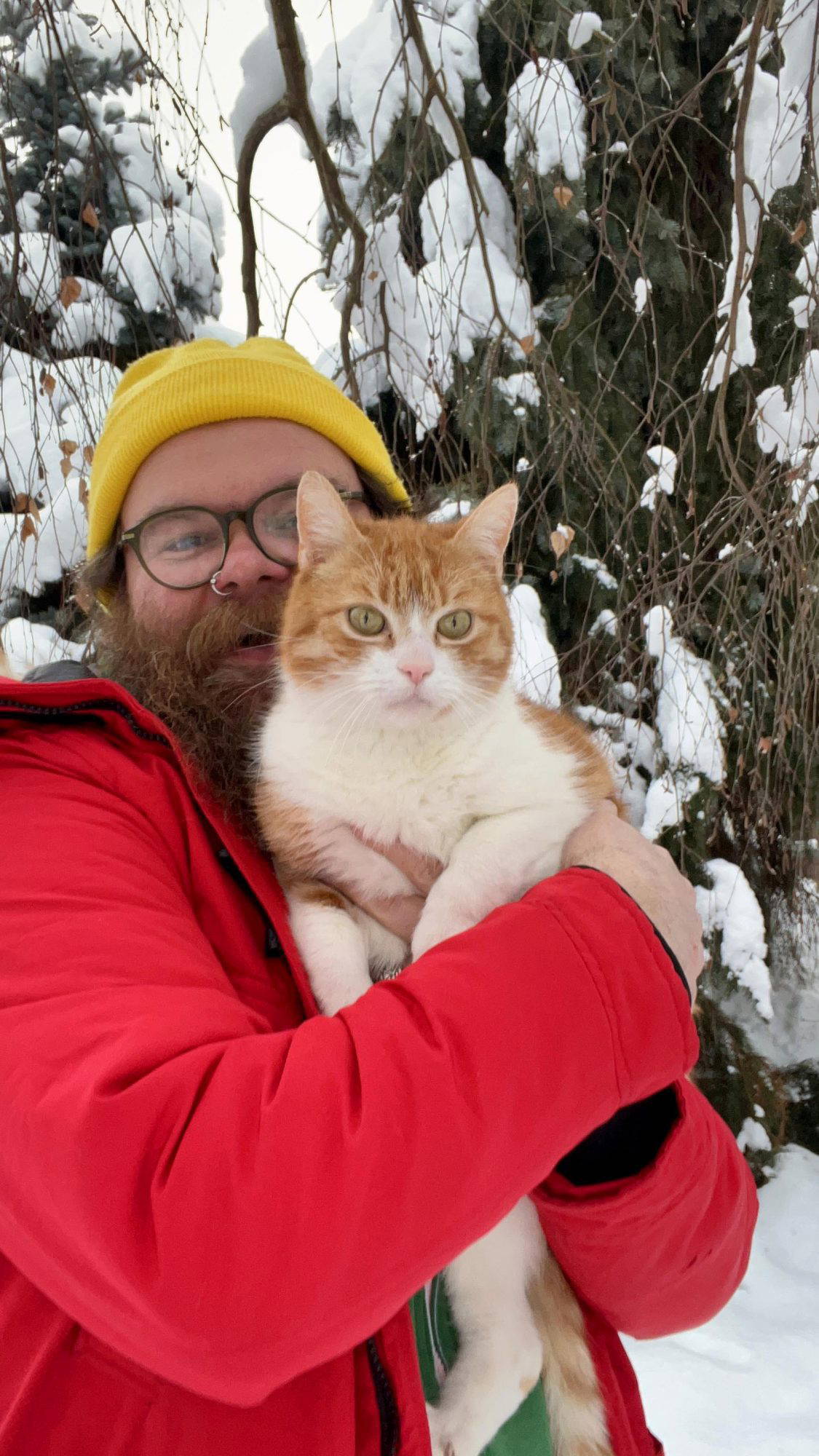
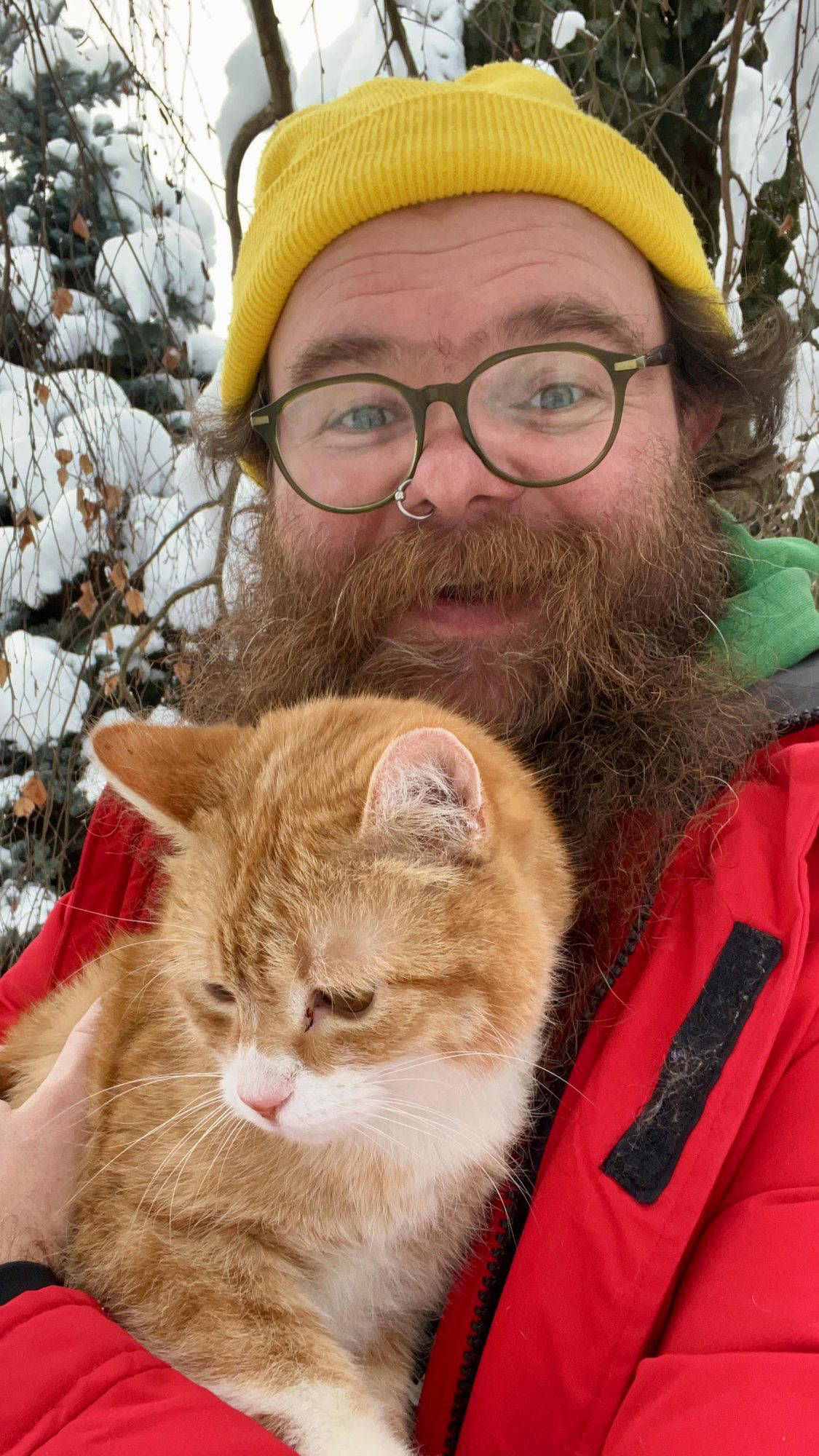
My name is Michał Klimczyk, but I usually go by my nickname, Szyszkodar, which means The Pinecone Giver.
The pinecone is a symbol of happiness, fertility, abundance, and prosperity. It is said that anyone who carries a pinecone will be seen by others as attractive. Back when tigers used to smoke pipes, people believed that fallen pinecones were gifts from a forest spirit called Szyszkodar. He offered them as promises of happiness and prosperity for the whole year, asking only that people care for nature in return.
To honour the forest spirit, people celebrated a woodland holiday called Szyszkielniki, or Pineconeliday. They exchanged pinecones as gifts, wishing one another happiness and prosperity, and planted trees together in Szyszkodar’s name.
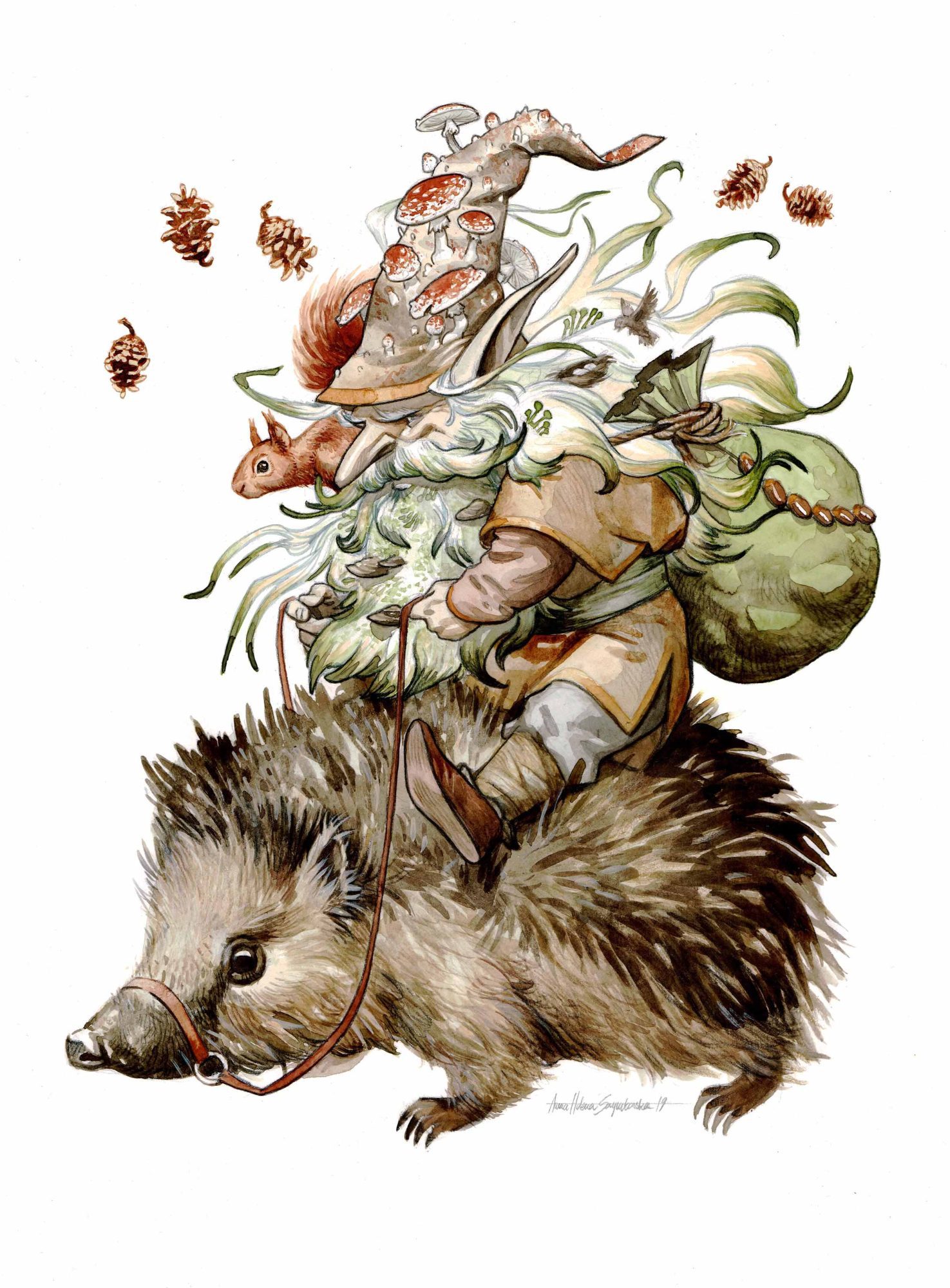
The Pinecone Giver was said to be an old man with a beard covered in moss, bird nests, bracket fungi, and flowers. He wore a necklace made of acorns, carried a sack full of pinecones, and rode a hedgehog, with a red squirrel perched on his shoulder helping him deliver his gifts.
I invented this entire story, and my plan is to keep celebrating Pineconeliday until people start believing it’s real.
Describe your style of printmaking
I am still a beginner printmaker, so it feels a little premature to say that I have a distinctive style yet. My lino-cutting skills are quite rough and naïve, and I’m still learning with every print I make.
What probably sets my work apart is the handmade paper that I produce myself.
How and when did you get started in printmaking?
I first came across linocut printing while studying Design and Digital Arts at Edinburgh Napier University. At the time, I wasn’t particularly interested in the medium.
That changed after I returned to my hometown of Kraków. I became heavily involved in promoting Little Free Libraries and book-swaps. Whenever a new one appeared, I would visit it and leave not only books but also one of my drawings as a surprise gift for whoever found it. I usually drew on discarded paper packaging that would otherwise have ended up as litter.
Creating a single drawing could take several hours, but I remembered this relatively simple printmaking technique from university and realised it might allow me to produce more images in less time. So I decided to give linocut another chance.
What led you to incorporate papermaking into your practice?
I’m a big fan of DIY culture, punk ethics, and reducing waste.
As I mentioned, I used to draw on discarded packaging, but some paper waste isn’t suitable for drawing because it is heavily printed or coated on both sides. I started wondering whether I could turn that waste into new sheets of paper instead.
After a great deal of trial and error, I eventually developed a paper that wasn’t particularly good for drawing and wasn’t ideal for writing either, but worked surprisingly well for printmaking.
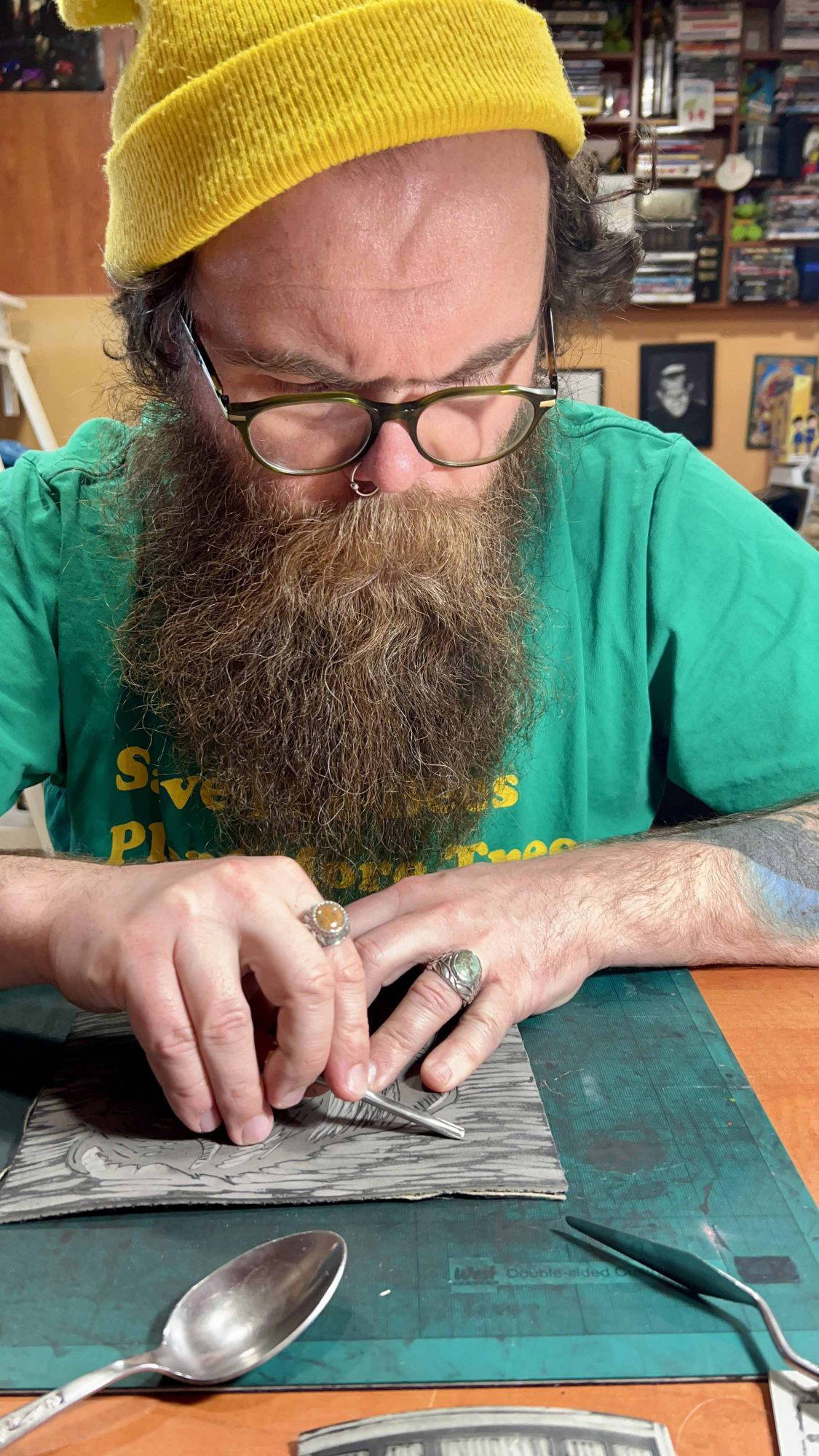
How does the surface of handmade paper change the way your prints behave?
It is almost impossible to make a perfect print on handmade recycled paper—and I think that’s wonderful.
Each sheet has its own texture, varied thickness, and imperfections. The fibres have already lived one life before being processed again, and they interact with the ink in unpredictable ways. A roller press doesn’t work particularly well, and I’ve never had much success with a baren either.
The best tool I’ve found is what I call a “printing spoon”. People who don’t normally work with printmaking often assume I mean an ordinary soup spoon, but they are completely different tools. It has become one of my favourite dad jokes during workshops with children. They usually laugh and say things like, “My parents have dozens of printing spoons in our kitchen!”
What inspires your work?
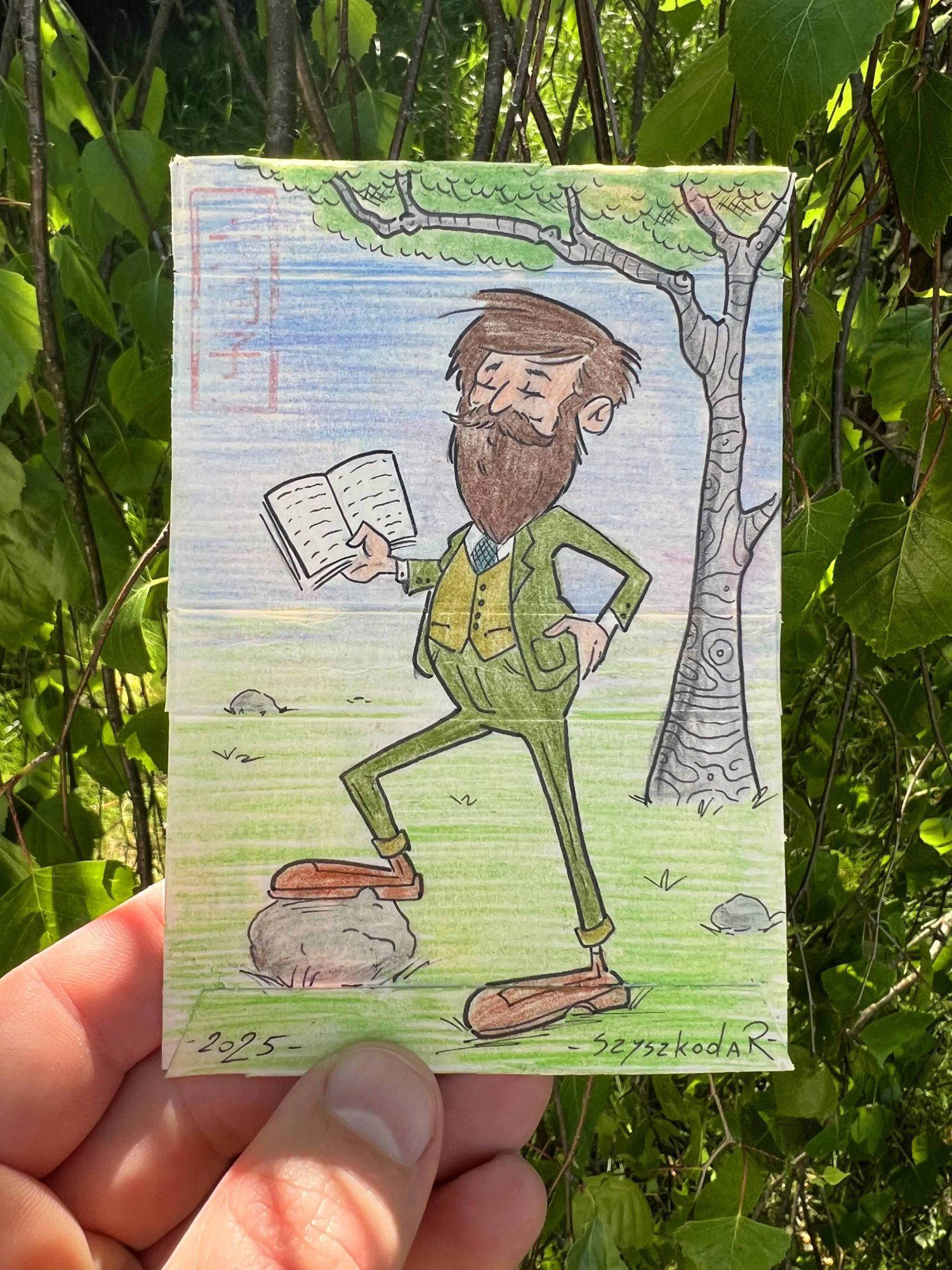
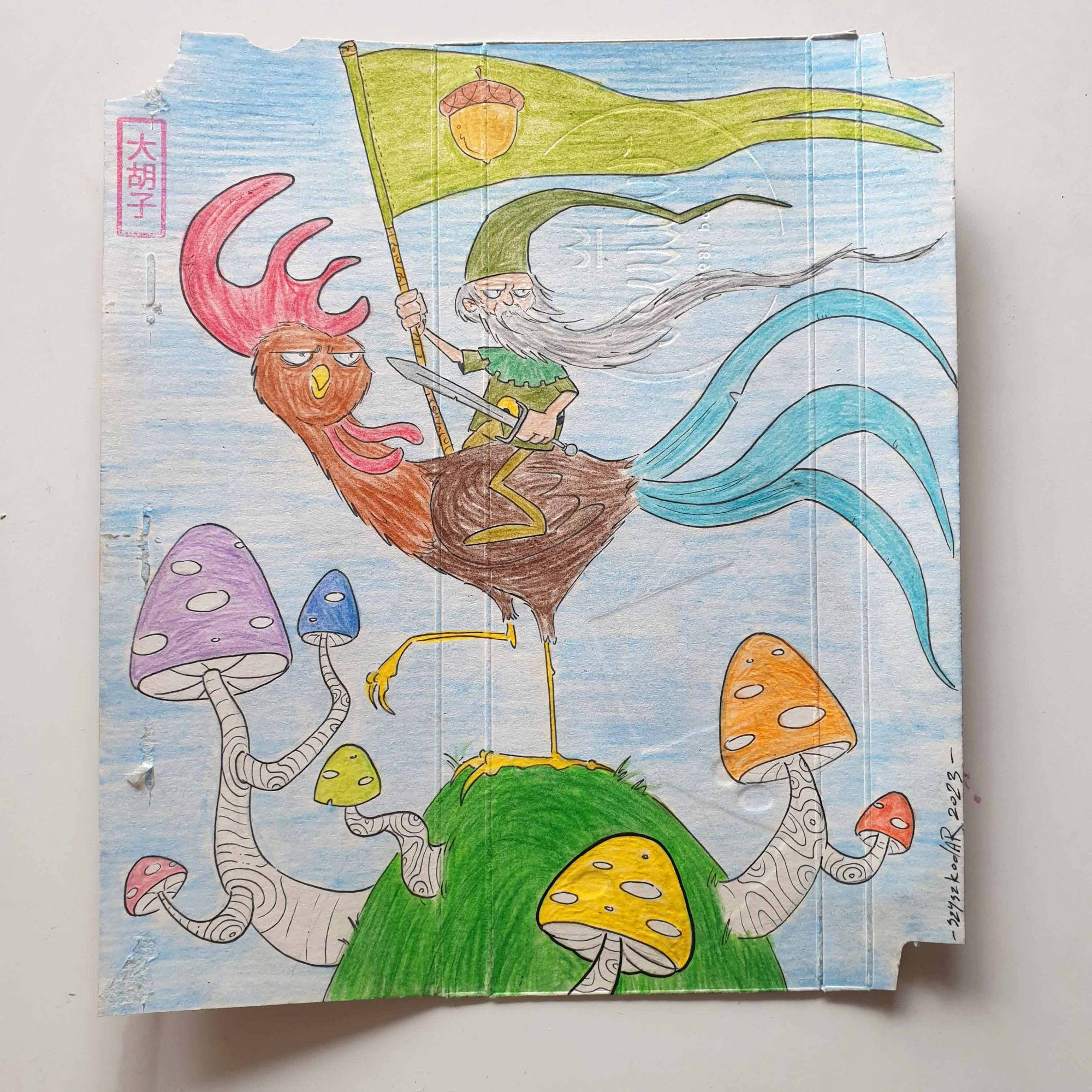
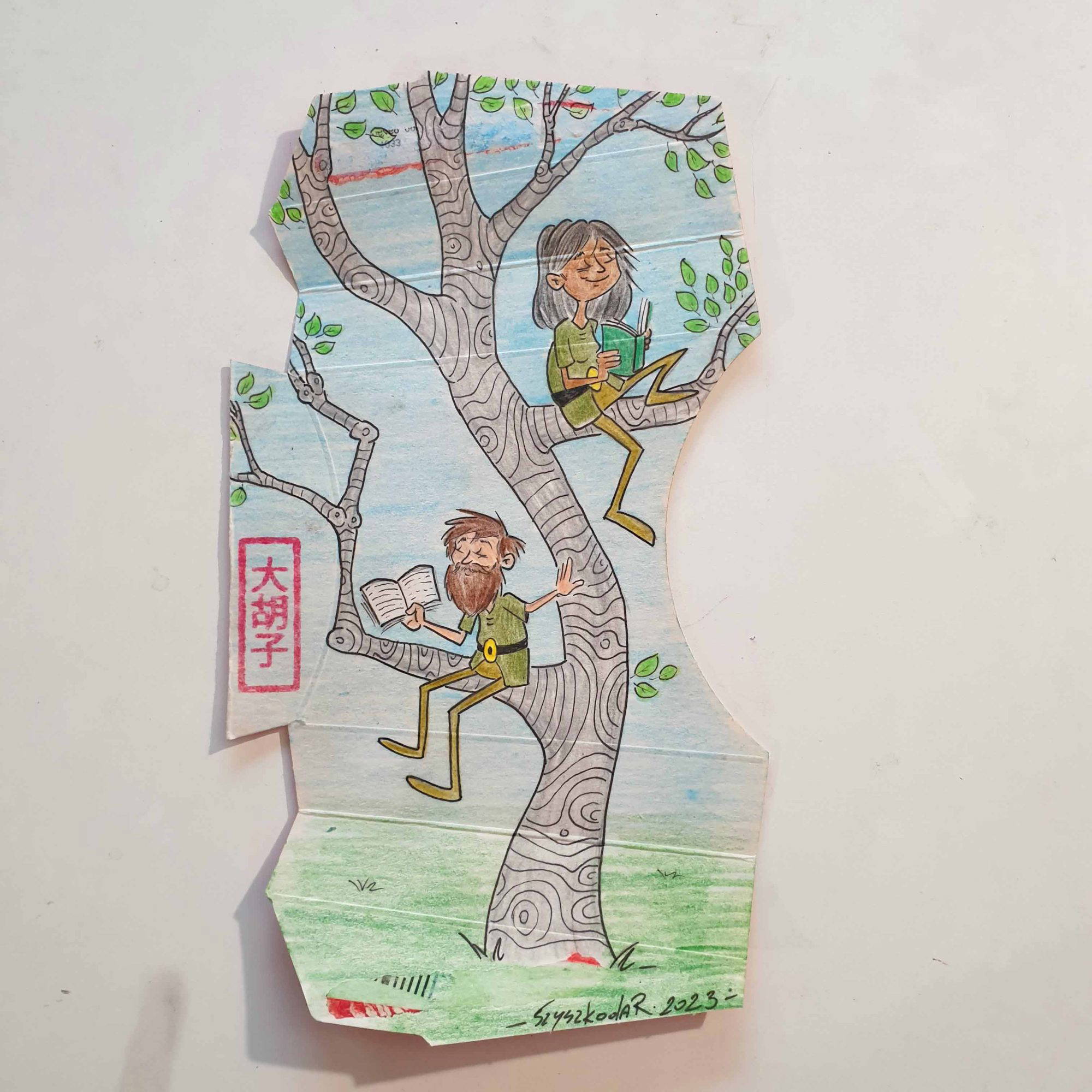
I’m very much driven by stories.
I love Tolkien, the Smurfs, Asterix and Obelix, Robin Hood, Frankenstein, and Dracula. Every print I create needs to have some kind of feel-good story behind it—something I can share with anyone willing to listen.
For me, the story is often just as important as the image itself.
Do you have a favourite print that you have made?
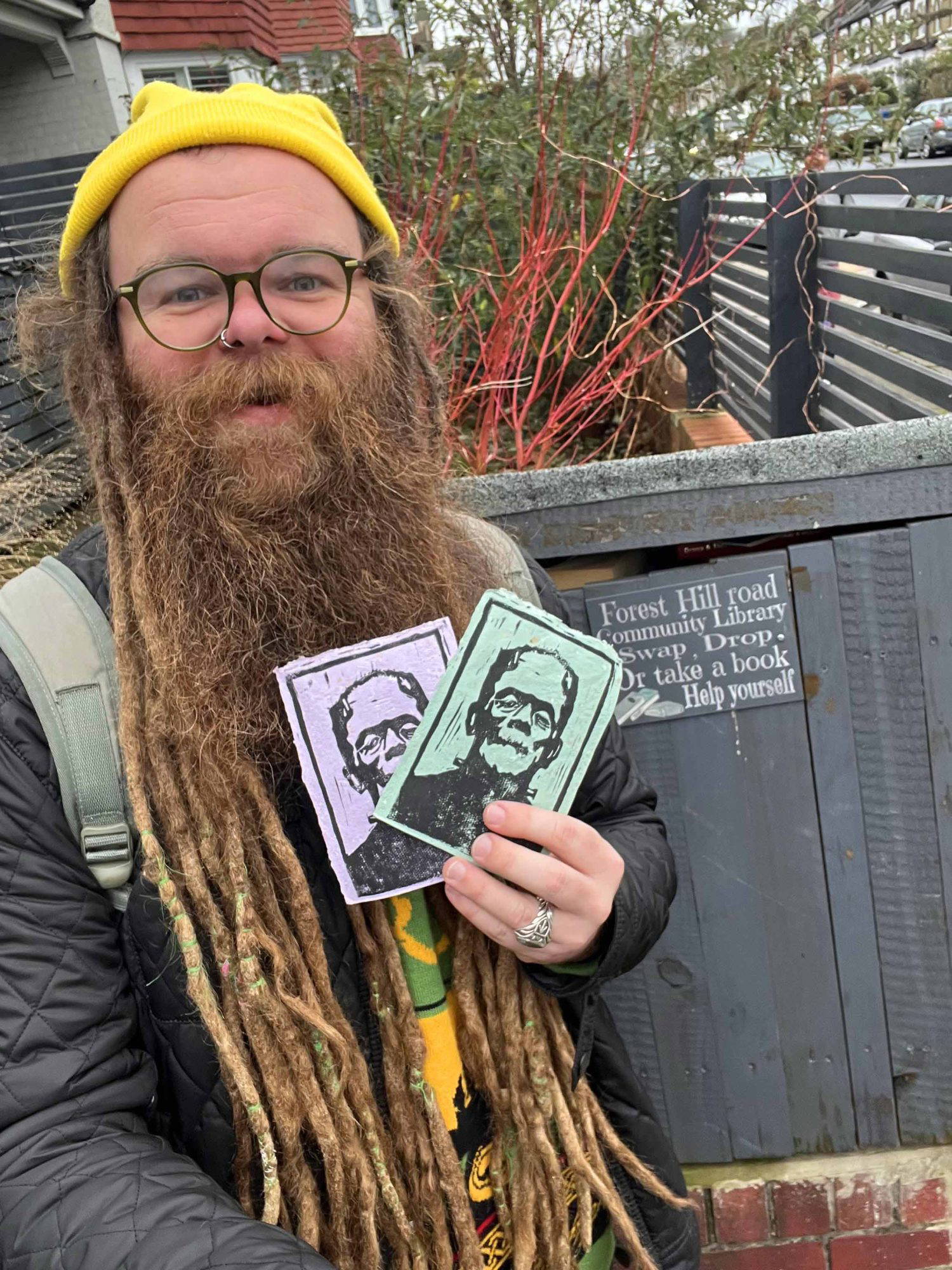
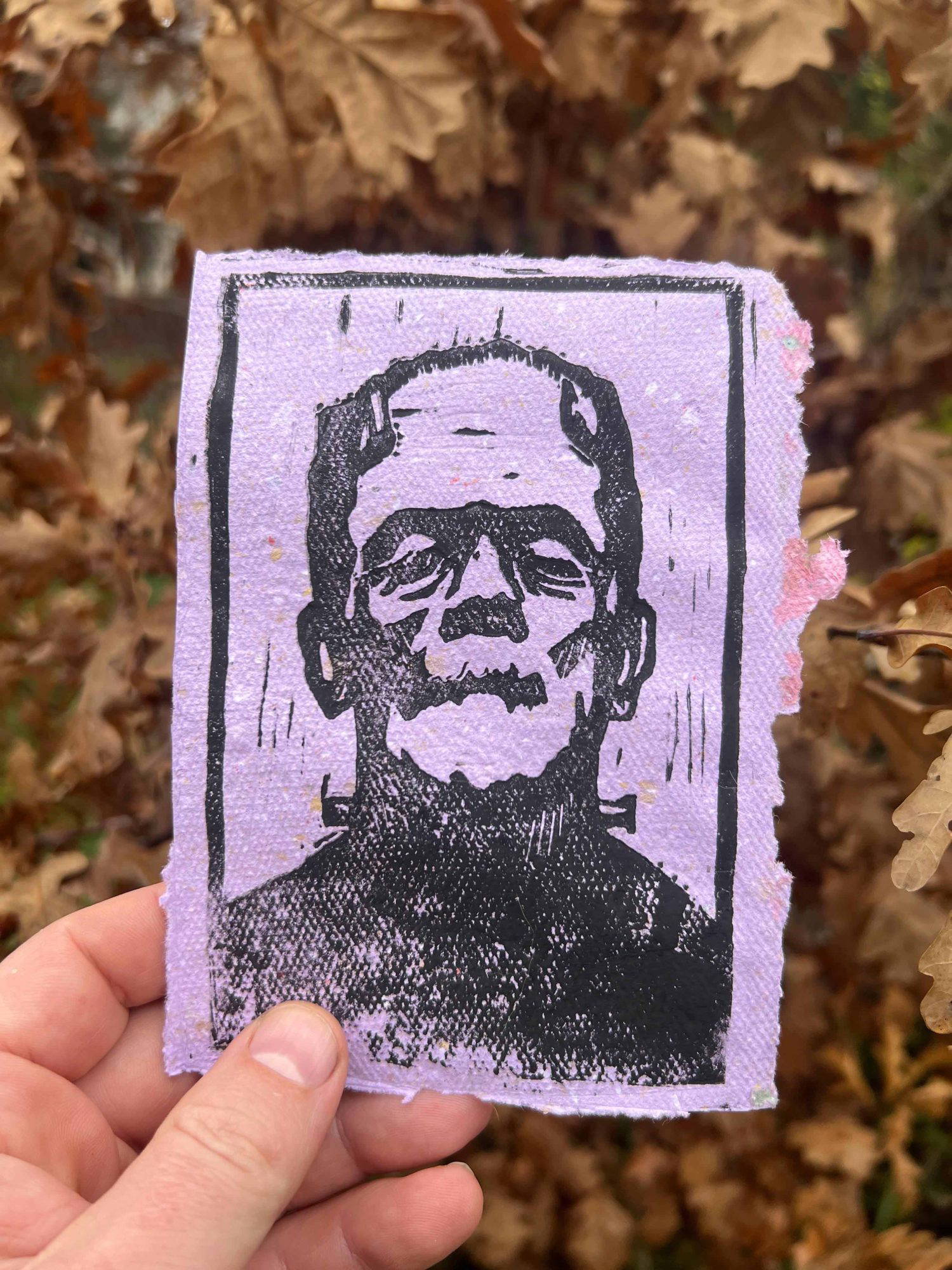
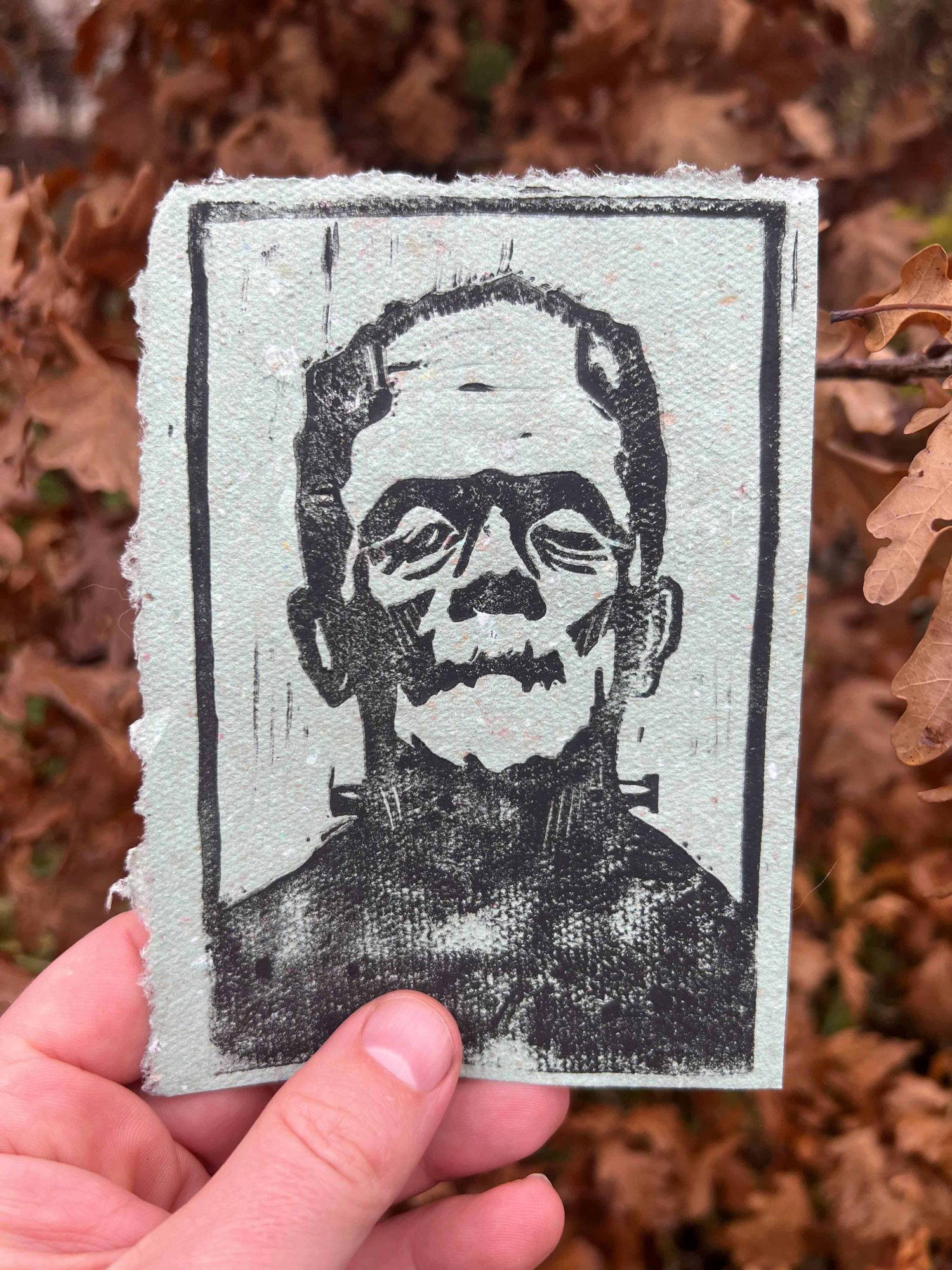
One of my favourite prints is a linocut portrait of Boris Karloff as Frankenstein’s monster.
Mary Shelley’s novel begins with a letter from Captain Walton to his sister Margaret, dated 11th of December. For years I have had a dream of making that date an International Frankenstein Day. To celebrate, I printed numerous copies of my Frankenstein linocut on handmade, recycled green and purple paper sheets.
I flew to London and spent 11th of December leaving the prints in as many book-swaps as I could find. Fortunately, I had access to a map of these locations created by Matt Brown from Londonist, which made the hunt much easier.
I also left several prints in the lobby of the London Library. My original plan had been to hide them among the books, but I quickly discovered that getting inside without a library card was not so straightforward.
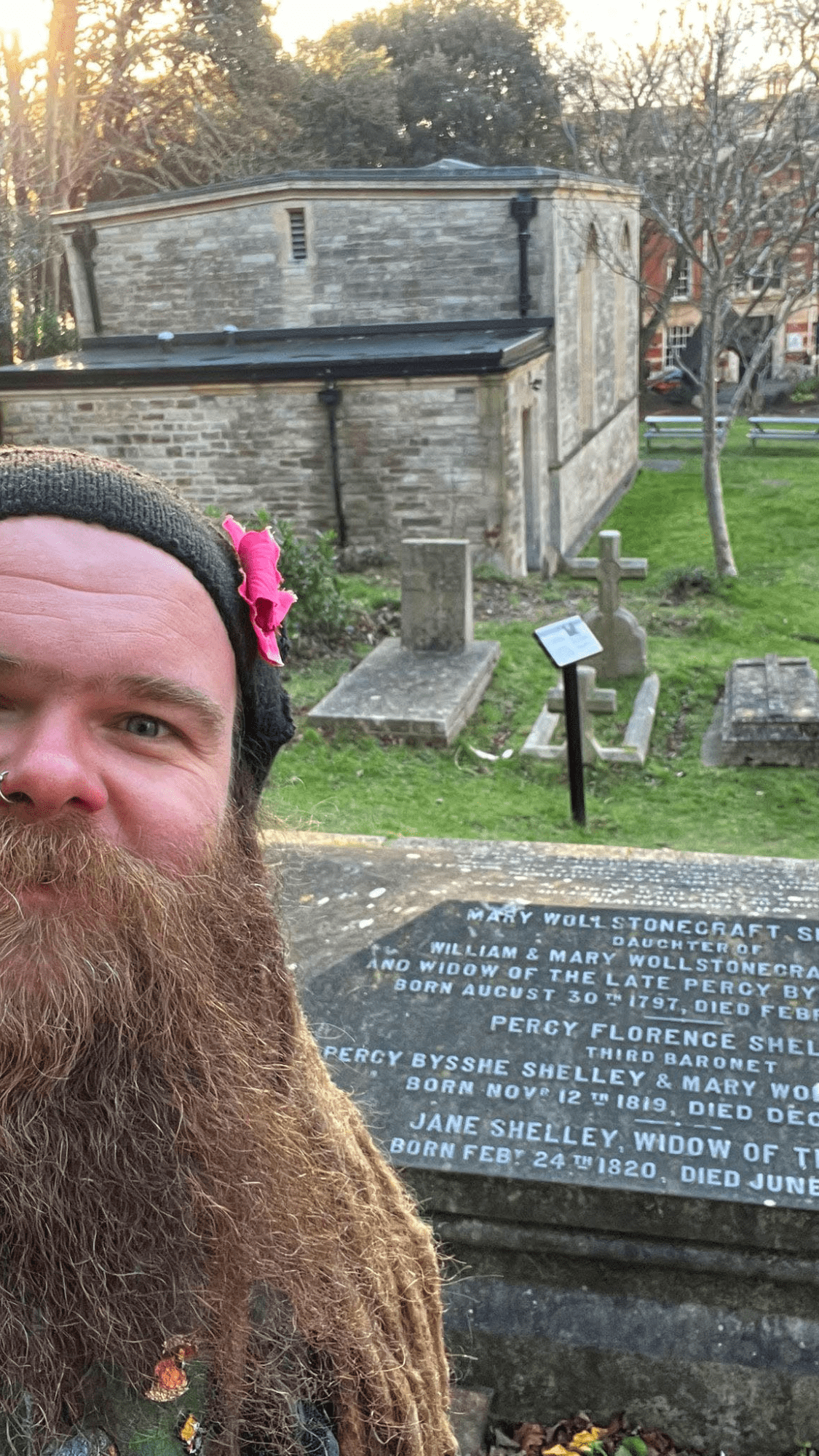
During the same trip, I visited both the birthplace and resting place of Boris Karloff and travelled to Bournemouth to visit Mary Shelley’s grave.
It was an absolutely wonderful adventure
What is your greatest achievement?
I think I have two achievements that stand out.
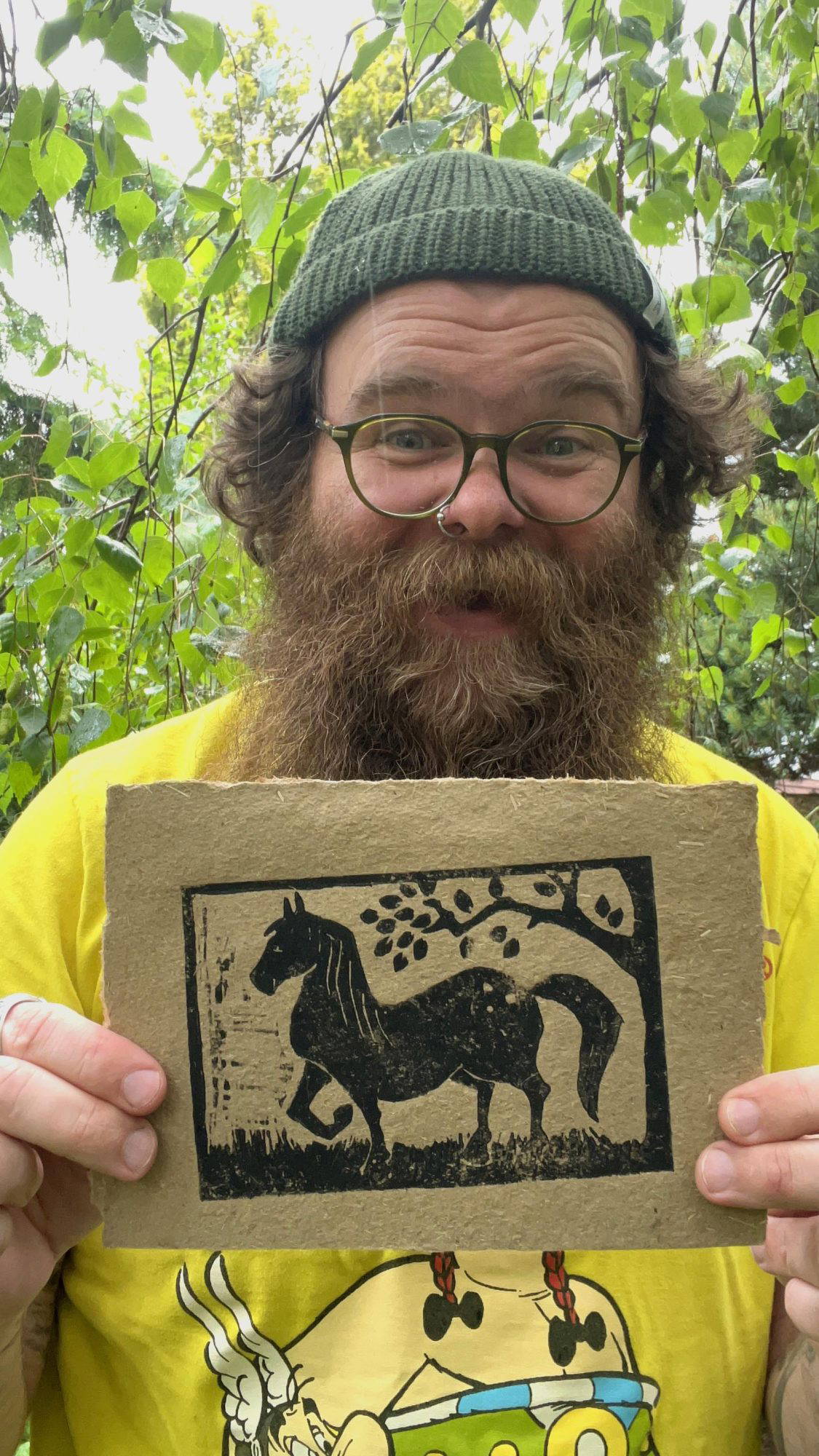
The first began after watching the YouTube series World Wide Waste. One episode featured a place in Thailand that makes paper from elephant dung. I immediately thought, “I have to try that.”
Finding elephant dung in Poland is not exactly easy, but in Kraków’s Main Square there are horse-drawn carriages. I approached one of the coachwomen and asked whether she might have any horse droppings that I could take. She looked at me rather strangely, but explained that from time to time elderly ladies ask for horse manure to use in their gardens.
“No,” I replied, “I’m an artist. I want to make paper from it.”
At that point she was almost certainly convinced that I was mad, but she kindly gave me a bin bag full of the material anyway.
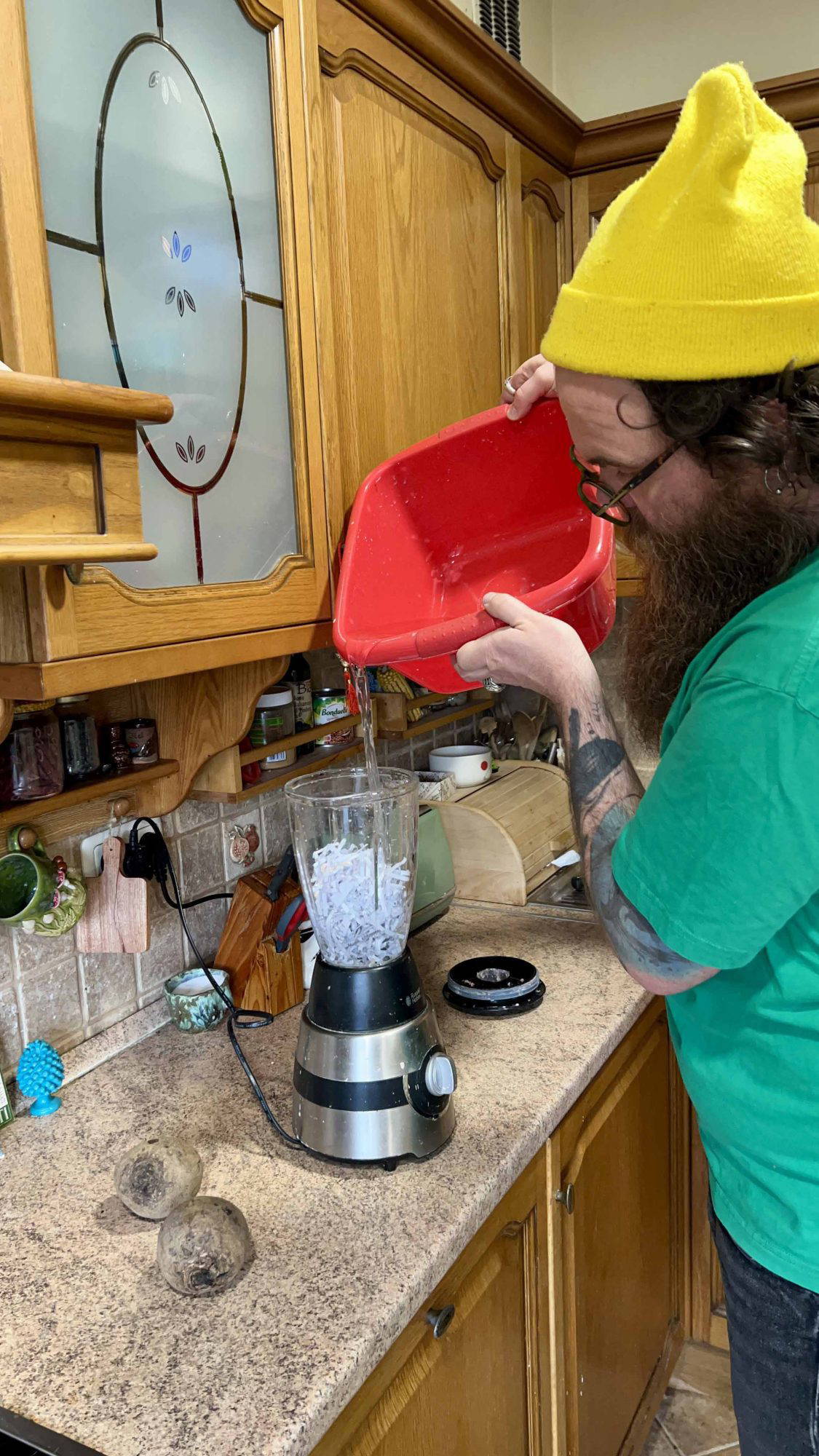
Back in my kitchen, I produced several sheets of paper from horse dung and printed a linocut of a horse onto them. I later shared the story on Instagram. The video received more than two million views and sparked a surprisingly passionate debate among some of my fellow countrymen. I also gave one of the prints to the coachwoman. She was delighted and could hardly believe that something so unusual had turned into a piece of art.
My second achievement came from entering an art competition organised by one of Poland’s largest banks.
I initially visited one of the bank’s branches and asked whether they could give me some paper waste from their shredders. Due to security regulations, they explained that all confidential documents had to be disposed of by an external company, so I eventually sourced shredded paper from a private business instead.
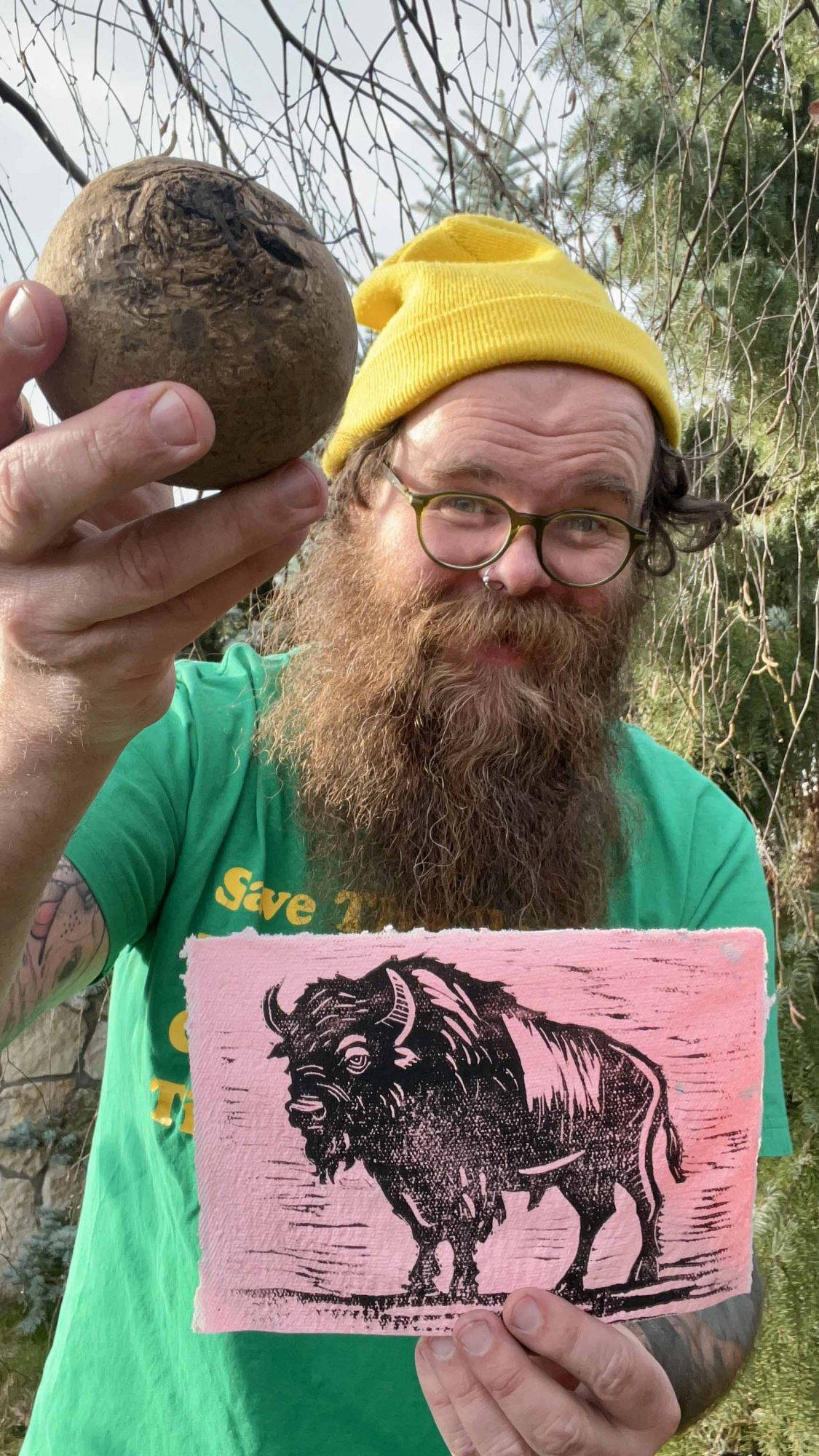
To reference the bank’s logo, I mixed the paper pulp with cooked beetroot to give it a reddish colour. I then carved a linocut of a European bison, inspired by the animal featured in the bank’s branding. After printing several copies on the handmade beetroot paper, I distributed them around Kraków’s book-swaps for lucky finders to discover.
The accompanying Instagram video reached more than half a million views and, out of over nine hundred applicants, I was awarded third prize in the competition.
What are you working on at the moment?
I have several projects and ideas that I would love to pursue.
One of them involves revisiting Professor Tolkien’s grave. There are some beautiful pine trees growing nearby, and I have been considering collecting seeds from the pinecones there and growing seedlings from them. I would then like to plant these trees near schools, libraries, and other cultural institutions interested in having a “Tolkien tree” growing on their grounds.
In Kraków there is also a talented craftsman who makes wooden watches. One day I would love to visit Sherwood Forest and find a fallen branch large enough to create a Robin Hood watch that I could wear proudly.
Another idea is more ambitious.
The prize money I received from the bank competition is not a fortune, but it is enough to help me take the first steps towards creating a non-profit organisation.
A few years ago I watched The Salt of the Earth, a documentary about the Brazilian photographer Sebastião Salgado. At one point in his life, he and his wife began reforesting hundreds of acres of degraded land that they had inherited. The results were extraordinary. Together they founded Instituto Terra, which has transformed the landscape and restored biodiversity to the area.
At the moment I do not sell my linocuts commercially, nor do I run a business. However, I have been doing some calculations. If I could somehow sell 700 prints each month for 30 złoty (about £6) each and save a third of that income, I could support myself and my three cats while gradually building a fund to purchase land for reforestation.
After a year, I might be able to buy several acres and begin planting trees.
That is my dream: to sell prints and use part of the proceeds to restore woodland. I still need to work out exactly how to make such a venture sustainable, but the idea continues to inspire me.
Tell us an interesting fact about yourself.
By background, I am probably best known in Poland as a book-rescue activist.
I collect unwanted books and redistribute them—usually by cargo bicycle—to Little Free Libraries and book-swaps both within and beyond my city. The most common reasons people contact me are bereavement or moving house. In many cases, families are left with hundreds or even thousands of books and do not know what to do with them.
I am also working on a map of book-swaps across Europe and am always happy to hear from people who know of locations that have not yet been added.
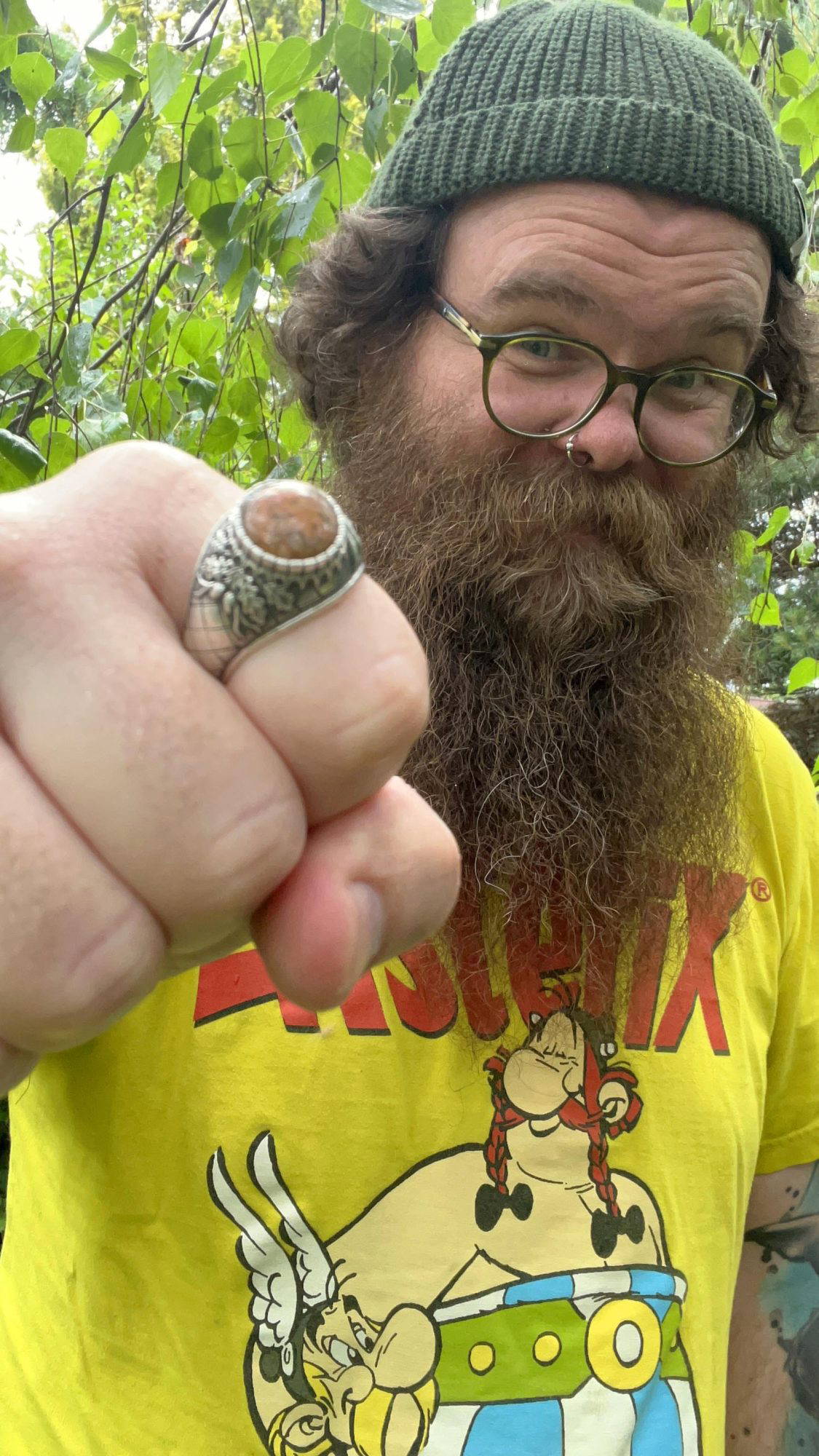
Another unusual fact is that I own a ring containing a stone taken from the resting place of J.R.R. Tolkien.
And then there is the story of the cursed letter.
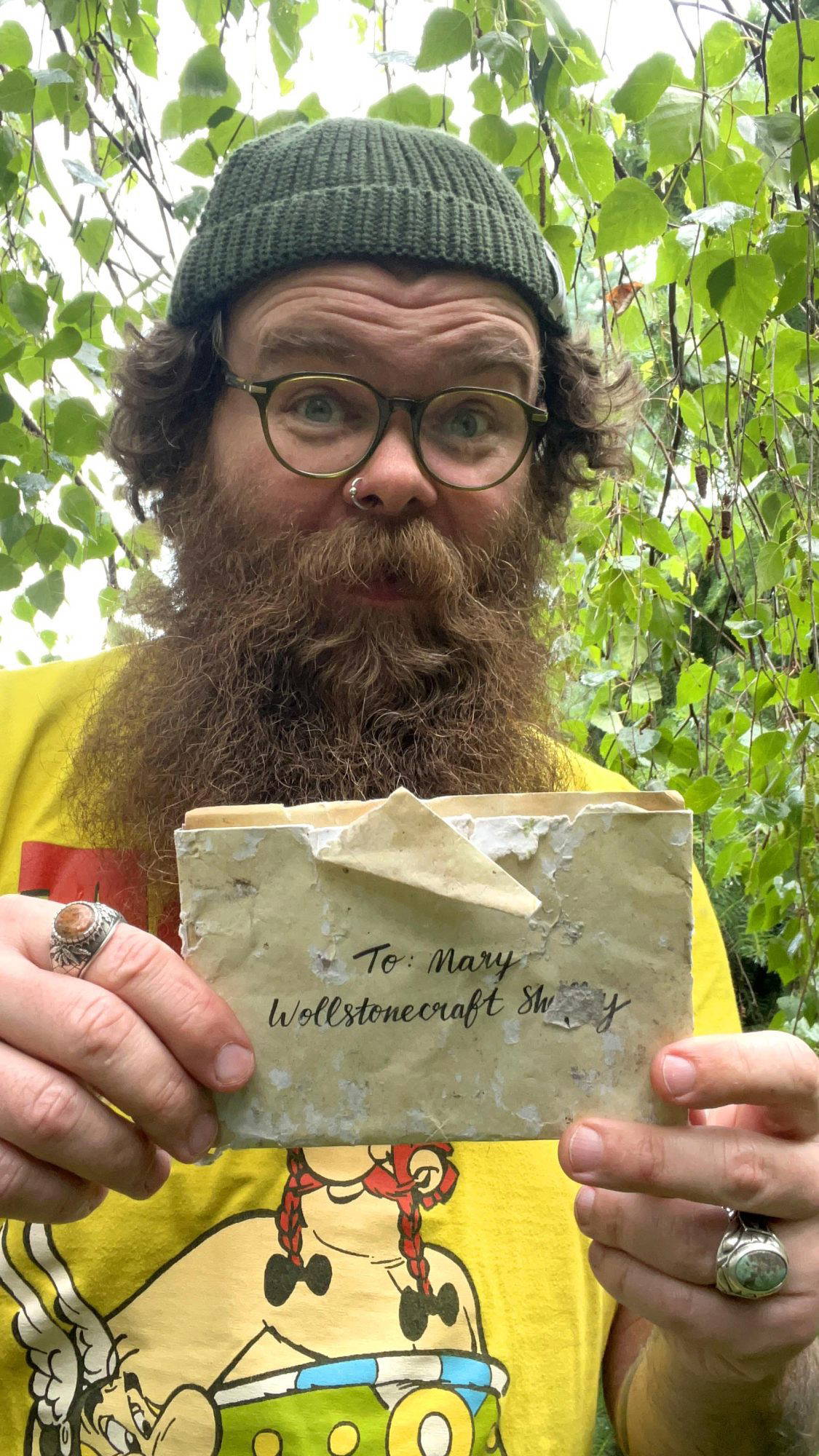
While visiting Mary Shelley’s grave in Bournemouth, I noticed a handwritten letter lying nearby. It was soaked through, fragile, and already beginning to disintegrate. It appeared to have been written to Mary Shelley by an anonymous admirer.
I felt that it would be a shame for it to disappear completely, particularly if it had been written by an aspiring writer. Hoping to preserve it, I took the letter with me and returned home to Poland the following day.
Shortly afterwards, I began experiencing pain in my right thumb. At first it seemed insignificant, but over the following weeks it became increasingly severe. Some friends jokingly suggested that I was being punished for taking a letter from Mary Shelley’s grave.
I am not a superstitious person, so I assumed the problem was simply the result of years spent carrying heavy loads of books. However, the swelling continued to worsen, and eventually I consulted a doctor. As an artist, I was particularly worried because it affected my dominant hand.
I was diagnosed with trigger finger and received an injection that was supposed to solve the problem, but it did not help. Meanwhile, friends and family continued teasing me about reading a letter that was never meant for me and taking it from a cemetery in the first place.
Since I was unable to return to Bournemouth myself, I contacted an old school friend who lives there and asked whether she would be willing to return the letter on my behalf. After hearing the story, she agreed and even seemed excited by the idea of visiting Mary Shelley’s grave.
I thought the matter was settled.
A few days later, however, she contacted me again and asked whether I had already posted the letter. Something seemed wrong. She explained that her husband, who is highly superstitious, had forbidden her from accepting it because he was worried that whatever bad luck had followed me might somehow transfer to their family.
At that point I was becoming increasingly frustrated. To prove—to myself as much as anyone else—that the entire thing was nonsense, I finally sat down and read the letter in full.
Unfortunately, not long afterwards, I ended up needing minor surgery on my thumb.
Following several months of recovery, I was finally able to return to rescuing books and cycling around the city as normal.
I still tell this story occasionally during interviews because audiences seem fascinated by it. Some people even hesitate to look at the letter itself.
In fact, about a year ago, after telling the story during another interview, I developed inflammation in my shoulder the very next day.
Sometimes we should be careful what we wish for.
When I picked up that letter from Mary Shelley’s grave, I hoped I might discover a great story.
In a way, I suppose I did.
Do you have any top tips or advice for other printmakers?
I think originality and storytelling are the most important things.
Technical skill matters, of course, but people often remember a story long after they have forgotten the details of an image. If your work reflects something genuinely personal and unique, it is far more likely to connect with others.
Where can we see more of your work?
You can find me on Instagram, Facebook, and, more recently, YouTube.
Instagram: @szyszkodar
Facebook: @Szyszkodar
YouTube: @Szyszkodar
Is there anything else you would like to tell us about?
At the turn of the twentieth century, there was a French lighthouse keeper named Louis Coulon who reportedly grew a beard long enough to carry his cats in it.
Whether the story is entirely true or not, I find it wonderfully inspiring.
My own aspiration is to become that sort of man and, one day, carry my three beloved cats in my beard as well.
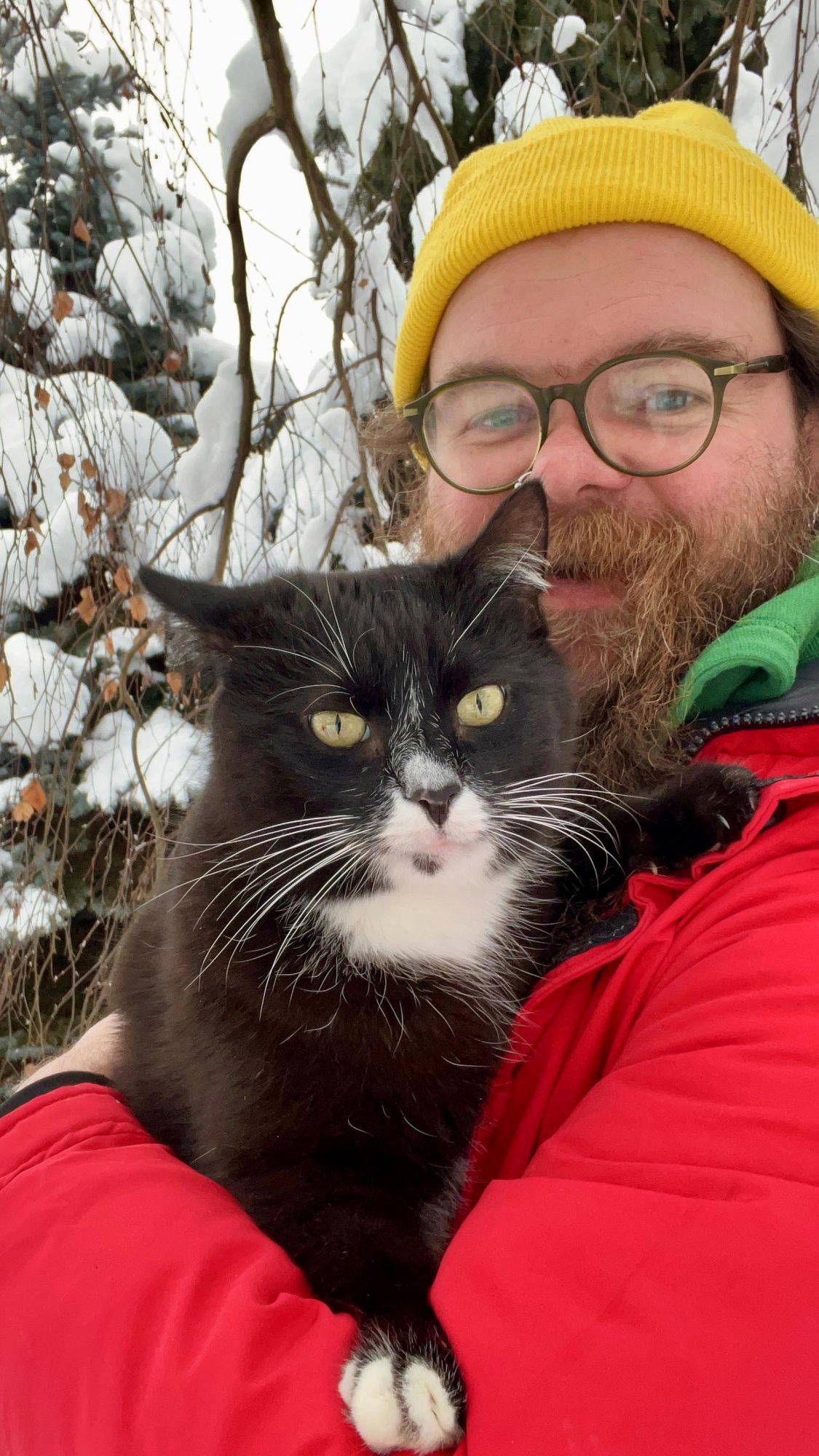
Image Credits – Michał Klimczyk
FEATURE YOUR ART!
Created something beautiful? Tag us @essdee_uk or use #essdee for a featured post on our Instagram page!
OTHER ARTICLES
Got 5 minutes? Have a read of one of our other blogs for more inspiration!

Joshua Lomax
Meet Joshua Lomax of Studio Fine, a lino print artist inspired by nature, travel and the Australian landscape.
Maison Encrée
Meet Amélie of Maison Encrée as she shares her linocut journey, architectural inspirations, creative process and passion for printmaking.
Joanne Spencer
Joanne Spencer Joanne Spencer is a self-taught reduction linocut printmaker based in Wiltshire. Inspired by nature, coastlines, ancient woodlands and the changing light of the seasons, she creates beautiful hand-printed linocuts that capture the atmosphere and...
Andrea Brown
Discover artist Andrea Brown as she shares her creative process, journey and the inspiration behind her winning print Isabella’s Beach.
Martin Truefitt-Baker
Discover how artist Martin Truefitt-Baker creates stunning Lino prints inspired by the South Wales landscape, wildlife and nature
Lynne Timmington
Discover Lynne Timmington’s scraperboard artwork, capturing nature and wildlife with remarkable realism. In this interview, she shares her inspirations, and passion for scraperboard.
Jack Ambro
Jack Ambro Jacek Ambroszczyk, who works under the name Jack Ambro, is a Scotland-based linocut printmaker known for his large-scale, photorealistic prints. In this interview, he discusses his approach to halftone linocut, the surreal influences behind his imagery,...
Alexandra Buckle
UK printmaker Alexandra Buckle shares her reduction linocut process, studio practice, teaching and exhibitions.
Sarah Dubosc
Sarah, a Normandy-based artist, creates linocuts inspired by wildlife and landscapes, celebrating biodiversity and mindful observation.
Send us a message
Contact Details
info@essdee.co.uk
(+44) 01562 60787
Essdee – Educational Art and Craft Supplies Ltd
Frederick Road, Hoo Farm Industrial Estate
Kidderminster, DY11 7RA

global.monkey.brave
Copyright Educational Art and Craft Supplies Ltd 2023 | Website Design by Nettl of Kidderminster
Send us a message
Contact Details
info@essdee.co.uk
(+44) 01562 60787
Essdee – Educational Art and Craft Supplies Ltd
Frederick Road, Hoo Farm Industrial Estate
Kidderminster, DY11 7RA
global.monkey.brave
Copyright Educational Art and Craft Supplies Ltd 2023 | Website Design by Nettl of Kidderminster
Send us a message
Contact Details
info@essdee.co.uk
(+44) 01562 60787
Essdee – Educational Art and Craft Supplies Ltd
Frederick Road, Hoo Farm Industrial Estate
Kidderminster, DY11 7RA
global.monkey.brave
Copyright Educational Art and Craft Supplies Ltd 2023 | Website Design by Nettl of Kidderminster